

























































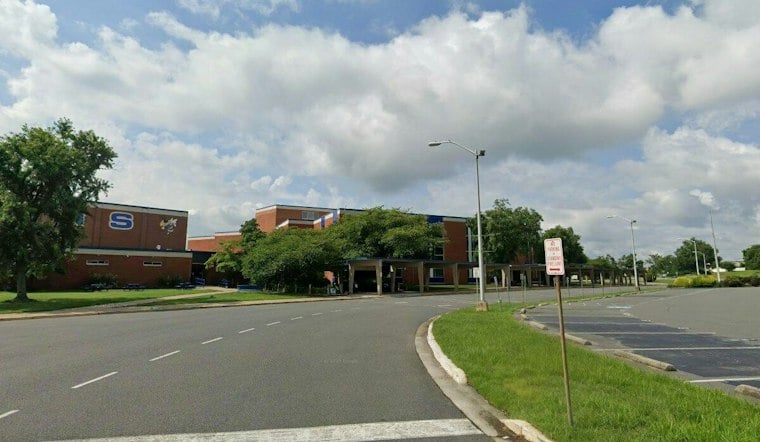
Governor Abigail Spanberger hosted a roundtable with Virginia workers in Manassas on Tuesday, then walked the halls of a local high school, using the twin stops to showcase the state's new worker protections and its push to prepare students for skilled careers. The governor discussed the rollout of new laws guaranteeing paid family and medical leave and paid sick leave for workers across Virginia, according to FOX 5 DC.
The visit came months after Spanberger signed the Paid Family and Medical Leave law in May, a measure that makes Virginia the 15th state in the nation and the first in the American South to establish a mandatory statewide paid family leave system, as reported by The Virginia Independent. Under the law, workers will eventually receive up to 12 weeks of job-protected leave per year, with wage replacement covering roughly 80% of an employee's average weekly wage, capped at 100% of the state average weekly wage, according to The River 95.3. That coverage applies to caring for a newborn, adopting, treating a personal illness, or tending to a sick family member.
A Multi-Year Countdown Before Benefits Kick In
The program is not an immediate fix. Payroll tax contributions won't begin until April 1, 2028, and the Virginia Employment Commission won't start receiving claims or paying out benefits until December 1, 2028, per the agency's own timeline. Small businesses with fewer than 10 employees are exempt from paying the employer contribution portion of that payroll tax, though their workers will still be eligible for full state leave benefits, according to WFIR News.
Spanberger also signed a separate paid sick leave mandate on May 20, requiring Virginia employers to provide eligible workers with up to 40 hours of paid sick leave per year, accruing at a rate of at least one hour for every 30 hours worked, according to McGuireWoods. That mandate applies to both full-time and part-time workers and rolls out in phases: employers with 50 or more workers must comply starting July 1, 2027, those with 25 or more workers by January 1, 2028, and every remaining employer by January 1, 2029, per the same law firm's analysis.
From Payroll Rules To Classroom Pipelines
After the roundtable, Spanberger visited Osbourn Park High School, touring specialized technical classrooms for automotive technology, biomedical sciences, and biotechnology to emphasize hands-on career preparation, according to Patch. The stop was part of the state's Strong Schools Tour promoting vocational and technical education, the outlet reports.
Patch notes that the visit highlighted Virginia's $2 billion in new K-12 education funding included in the state's 2026 budget, which funded a 4% raise for teachers and $519 million in school construction grants. Osbourn Park High School sits within Prince William County Public Schools, Virginia's second-largest school division, serving more than 90,000 students across nearly 20,000 faculty and staff members, per Patch's reporting.
Taken together, the roundtable and the school tour reflected an administration trying to link workforce protections for current employees with career pipeline training for future ones. The paid leave laws make Virginia a policy pioneer in the South, even though payroll deductions and benefit payouts won't take full effect until 2027 and 2028, meaning employers across Northern Virginia now face the task of navigating multi-tiered compliance schedules and payroll updates in the years ahead.
Part of a Broader Worker Agenda
Tuesday's stops build on a string of labor moves from Spanberger's first year in office. In April, she signed a $15 minimum wage law that raises Virginia's minimum wage to $15 per hour by January 1, 2028, while also expanding wage protections to agricultural workers and requiring salary disclosures in job postings. That same spring, however, she drew criticism from labor advocates after vetoing a measure to expand public employee collective bargaining, a decision Hoodline previously covered.





